
Engagement
Looking for something specific? The following topics address a wide range of business needs and challenges.
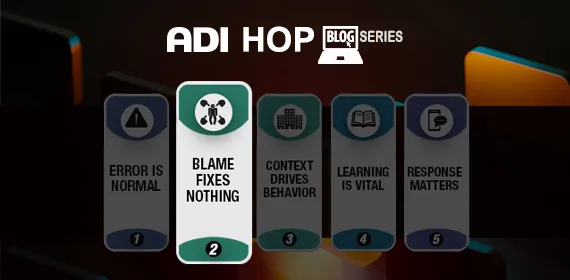
Turning HOP Principles into Action: Blame Fixes Nothing
This is the second in my 5-part blog series on the five Principles of Human and Organizational Performance (HOP). This series is written to help provide specific actions leaders can take to implement…

Visual Management or Wallpaper?
Wallpaper is making a design comeback with bold colors and eye‑catching patterns. But there is another kind of “wallpaper” you might walk past every day at work: the visual management board. It often…

A Curious New Year
Curiosity has been praised by researchers, therapists, and business leaders as a mindset that strengthens relationships, boosts well-being, and sparks creativity. That makes it an appealing choice…

Beliefs Don’t Build Safe Cultures—Behaviors Do
I recently came across a series of articles (links at the end) published in Industrial Safety & Hygiene News that explored the role beliefs play in safety – specifically risk management and…

The Resurrection of Fear-Based Management
With the disturbing rise of disrespect and intolerance in our culture, fear-based management is in danger of becoming normalized again. Read Judy Agnew's post on LinkedIn.

Two Consultants on Leadership: Critical Behaviors in a Job Brief
Onsite job briefs are a valuable last-step planning tool for getting jobs done safely. Even with the best designed plans, things often change on the worksite. Onsite job briefs give…

Are Your Work Systems Unintentionally Sabotaging Employee Engagement?
Telecom giant AT&T recently announced it is scaling back its “presence report” system. This system is designed to enforce return-to-office compliance for employees. Since its introduction, it has…

Management Engagement: The Canary in the Coalmine
According to Gallup’s “State of the Global Workplace 2025,” management engagement has dropped to 27%, meaning only 27% of managers are truly engaged in their jobs. Our consulting experience suggests…

Flip-Flopping Leaders?
Frustrated by leaders who seem to flip-flop on their decisions? When leaders have a habit of making a decision and then reversing course soon after, those affected often start taking a wait-and-see…

Do Return-to-Office Mandates Help or Hurt?
As we navigate the evolving world of work, return-to-office (RTO) mandates have again become a major point of discussion. Trend research showed that the proportion of mostly in-person workers doubled…

The Impact of Stress on Return-to-Work from Injury
The negative impact of stress in the workplace is well documented. Long-term stress can cause physical health issues (high blood pressure, headaches), mental health issues (irritability, depression,…
Two Consultants on Leadership: What Are The Most Important Skills for New Supervisors
Welcome to the 2025 blog series! In 2025, I am taking a slightly different approach to my newest blog series. I’ll continue to focus on leadership best practices and leader behaviors that will…

Frontline Supervisors: The Key to Safety Culture
Discussions of safety culture improvement often focus on senior leaders, which is appropriate since senior leaders are the ones who must define the desired safety culture, set the vision and values…
Psychosocial Hazards Part II: What Leaders Can Do Now
In Part I of this 2-part series, I presented a primer on psychosocial hazards (PSHs) for readers who might be unfamiliar with or are simply interested in learning more about this topic. As a quick…

An Example of Safety Leadership Success: Moving Towards a Just Culture
Want an improved safety culture that cultivates communication and problem solving? Make a systems approach the primary tool in your safety leadership strategy. This ninth blog is dedicated to…
Psychosocial Hazards Part I: The Move to Occupational Safety & Health
Introduction to Psychosocial HazardsI recently attended the annual safety conference of the American Society of Safety Professionals (ASSP) in Denver, CO. Often at conferences, I’ll attend a talk…

Sustaining a Culture of Engagement with Behavioral Science
If you manage a team or hold a leadership role in an organization, you may already know the benefits of maintaining high engagement. Highly engaged teams are correlated with lower rates of attrition…

We Just Dropped In to See What Condition Your Culture Was In
Several current and prospective clients have recently approached us at ADI with a request for an assessment of their safety or organizational culture. Requests for this service are not uncommon, but…
