
Desired Paths: What Organizations Can Learn from Mechanical Erosion
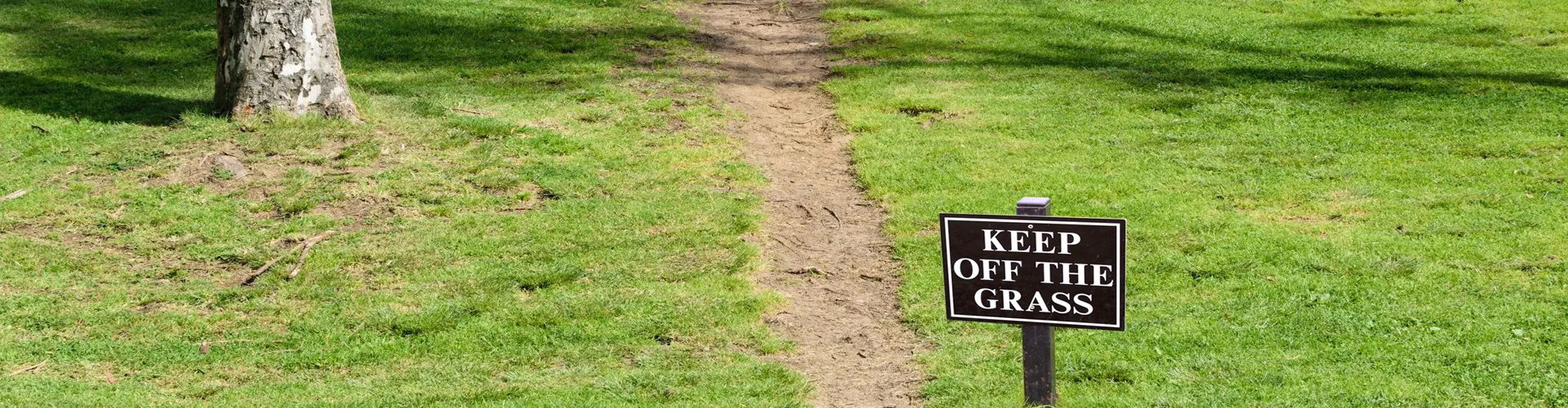
Desired paths are a fascinating example of behavior in the real world. A desired path is a trail that appears when people, or even one person, repeatedly walk to a destination using what makes the most sense to get to a location rather than the path as designed. The technical name is called mechanical erosion as people (or animals) are literally eroding a new path by their foot traffic. Desired paths are essentially the best way to get from one point to another. They occur when a planned path is poorly designed, convoluted or simply less than ideal to get from one location to another. They are the remnants of how people actually behave in a given environment, and from an organizational and safety perspective, there is a lot we can learn from them.
A Behavioral Perspective
A question that continues to plague designers, landscape architects and engineers is, “Why do people create their own path?” From a behavioral perspective, this question is actually quite easy to answer: people seek out positive reinforcement. When you look at the desired paths people make, they are easier, faster, better, or more fun to use than the one that was designed. Each one of those consequences is a powerful positive reinforcer. When you compare the desired path to the one designed, you often will find the designed path is slower, more cumbersome, or boring to follow. When you look at it from a consequence perspective, it’s clear why desired paths are formed. People will allocate their efforts toward behaviors that produce positive reinforcement.
Looking at the picture above of a desired path, you can imagine that the people who manage the land attempt to prevent people from walking on the grass. Typical interventions might include things such as: “Keep Off The Grass” signs (as seen in the picture), or a barrier of some sort. What happens when you attempt to fight the desired path in this way? People will find ways around your barriers. These are antecedent-based solutions. The likelihood that they will produce the desired result is not very high. Attempting to fight a consequence issue with antecedents will be mostly ineffective. To be effective, one must embrace the desired path.
 A famed example of embracing the desired path comes from Michigan State University. When new buildings were created, the university did not put in sidewalks. They instead waited until the students created their own paths to get from one building to another. Once their paths were sufficiently defined, they paved the students’ paths. There are many other examples of desired paths being adopted, which from a behavioral science perspective makes a great deal of sense. Why? Consequences. When you give people the easiest, fastest, best, or most fun way of getting from one point to another, people will use it.
Desired Paths Exist Inside Organizations
While they might not be as easily seen, desired paths exist inside organizations. They are created when people find better ways of accomplishing a task. By better, just as in the above examples, I mean that they produce more positive reinforcement than the work-as-designed options. Some desired paths might be labeled as “shortcuts,” and leaders may attempt to block them. Others could be called “innovation,” “operational excellence,” or “process improvement.” Leaders may attempt to harness those. They exist, and how organizations view and address desired paths matters.
Many organizations have a long history of putting up “Keep Off the Grass” signs, attempting to get employees to walk on the sidewalks (complete work as currently designed) without regard to the consequences that design produces. The typical antecedent solutions organizations try include reminders, signs, retraining, new policies, etc. What Aubrey Daniels called “Louder, Longer, Meaner” in the book, Bringing Out the Best in People. Other organizations have tried adding or escalating fear-based management tactics to manage out work deviations. As with the desired paths discussed above, those solutions have limited, if any success, and often lead to detrimental side effects within the organization’s culture and organizational performance.
Desired Paths = Optimizing Organizational Learning
Organizations need to embrace the desired path by developing a system to capture, evaluate and implement desired paths. The goal is to optimize work while keeping safe-quality production high. This reframing of how organizations view and address desired paths will allow organizations to improve performance by improving the processes, systems, and work people interact with. When organizations design (or redesign) work to be easy, fast, safe and effective for employees, people will naturally follow the process and feel good about doing it. Ensuring the work-as-designed is how work actually gets done.
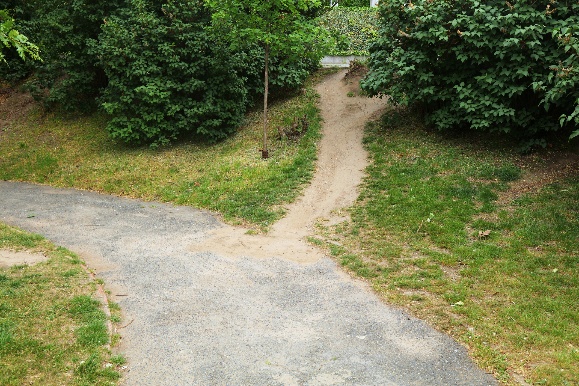 Desired paths are everywhere. Organizations that adopt systems to capture and implement desired paths will have a culture of continuous improvement focused on increasing positive reinforcement for doing work the right way. The alternative is filled with badly designed systems, processes, and work. This might look good on paper, but it will lead to employees creating their own paths. Organizations that focus on improving paths will have a workforce that uses them. It is time to adopt the desired path.